
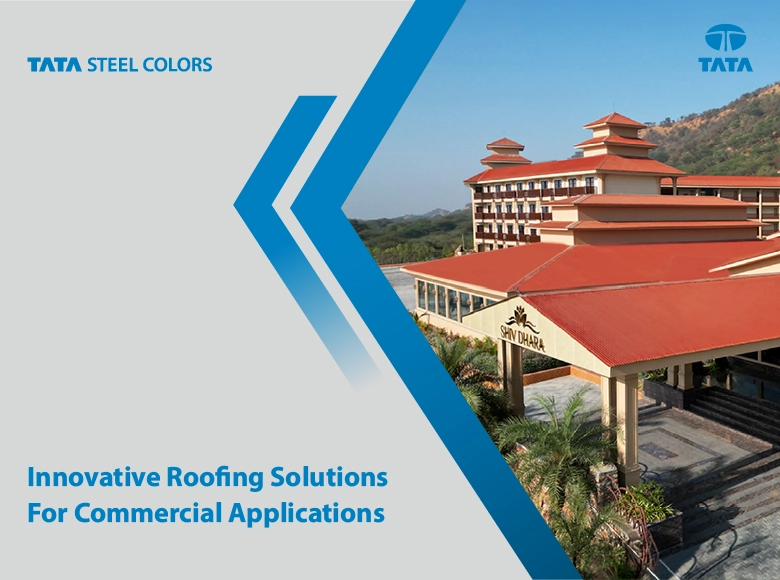
The role of roof and wall cladding solutions in high-performance commercial infrastructure
Commercial infrastructure today operates under demanding conditions. IT parks, logistics hubs, manufacturing facilities, and institutional campuses require buildings that support continuous usage, controlled environments, and long-term durability. In this context, roof and wall cladding solutions have evolved from basic protective layers into performance-driven systems that influence structural behavior, operational efficiency, and lifecycle reliability.
Moving beyond basic roofing solutions
Traditional roofing approaches focused primarily on covering the building envelope. Modern roofing solutions are engineered to address multiple performance parameters simultaneously. These include weather protection, thermal behavior, structural integrity, and long-term durability.
In large commercial developments, roofing solutions must handle wide spans, varying slopes, and exposure to diverse environmental conditions. Solutions designed using advanced materials such as advanced color coated steel coils and Al-Az alloy coated steel coil provide consistent performance across these conditions. Their metallic coating technology supports corrosion resistance, while engineered profiles enhance water drainage and load distribution.
For commercial roofing solutions, this integration of material science and profile engineering ensures predictable performance across large roof areas. It also supports ease of installation and reduces variability during execution.
The growing importance of wall cladding in commercial buildings
Wall cladding has become equally critical in defining building performance. Modern roof and wall cladding systems contribute to structural protection, thermal regulation, and visual consistency across commercial infrastructure.
High-quality roof and wall cladding solutions are designed to withstand environmental exposure such as humidity, industrial pollutants, and temperature variation. In sectors like pharmaceuticals and chemicals, where exposure conditions are more demanding, high-corrosion steel cladding plays a significant role in maintaining durability.
Applications such as Industrial roofing for pharma plants and chemical plant roofing in Gujarat demonstrate how cladding systems must align with operational requirements. In these environments, cladding systems are often selected to support chemical plant safety standards while ensuring long-term surface stability.
Acid-resistant wall panels are used in specific areas where exposure to chemical processes is higher. These panels provide an additional layer of protection, supporting both safety and durability requirements in controlled environments.
Integrated roof and wall cladding solutions
High-performance commercial buildings benefit from integrated roof and wall cladding solutions rather than independent systems. When roofing and cladding are designed together, compatibility between profiles, fasteners, and junction details improves overall performance.
This integration reduces the risk of weak points at roof-to-wall intersections. It also enhances weather-tightness, which is essential in regions with heavy rainfall or wind-driven conditions. Coordinated systems ensure that water drainage paths remain uninterrupted and that structural loads are distributed efficiently.
Integrated systems also simplify installation, as standardized components and detailing practices reduce complexity on site. This contributes to consistent quality across large-scale commercial projects.
Performance in aggressive environments
Commercial infrastructure located in coastal or industrial zones requires additional consideration. Coastal-grade roofing solutions are specifically designed to perform in high-salt environments, where corrosion risk is elevated.
Similarly, in industrial clusters such as Bharuch, Anti-corrosive cladding Bharuch is widely adopted to address exposure to chemicals and industrial emissions. These applications highlight the importance of selecting materials and coatings that align with environmental conditions.
Metallic-coated steel substrates combined with advanced paint systems provide enhanced protection in such environments. This ensures that both roofing and cladding systems maintain their performance over extended service life.
Structural and operational benefits
Roof and wall cladding solutions by Tata Steel Colors contribute directly to structural performance. Engineered profiles with defined rib heights and panel widths support load-bearing requirements and improve span capability. This is particularly important in large commercial buildings where column-free spaces are preferred.
From an operational perspective, durable cladding systems reduce maintenance requirements. Buildings with high-performance roofing solutions by Tata Steel Colors experience fewer disruptions due to repairs or replacements. This supports uninterrupted operations in commercial environments.
Thermal performance is another key consideration. While insulation systems play a role, the outer cladding layer also influences heat absorption and surface behavior. Materials designed for thermal stability help maintain consistent indoor conditions, which is critical in facilities such as data centers and pharmaceutical plants.
Aesthetic consistency and design flexibility
Commercial infrastructure often represents brand identity and architectural intent. Wall cladding systems provide flexibility in terms of color, finish, and profile, enabling designers to achieve consistent visual outcomes.
High-quality coating systems ensure color retention and surface durability over time. This is important in multi-building campuses where uniform appearance across structures contributes to overall project value.
Roofing profiles also support design flexibility. Long-length panels and clean lines enhance the visual appeal of large commercial buildings while maintaining functional performance.
Supporting long-term infrastructure performance
The role of roof and wall cladding solutions extends beyond immediate construction requirements. These systems influence how buildings perform over decades of use.
Durable materials, engineered profiles, and integrated systems contribute to reduced lifecycle interventions. This aligns with the expectations of developers, facility managers, and infrastructure planners who prioritize reliability and predictability.
In sectors with specialized requirements, such as chemical processing or pharmaceuticals, the alignment between cladding systems and operational needs becomes even more critical. Selecting appropriate materials and systems supports both performance and compliance.
Conclusion
High-performance commercial infrastructure relies on more than structural design alone. Roof and wall cladding solutions by Tata Steel Colors form a critical part of the building system, influencing durability, efficiency, and long-term reliability.
Modern roofing solutions and wall cladding systems by Tata Steel Colors , when engineered and integrated effectively, provide consistent performance across diverse environments. From coastal regions to industrial clusters, these systems support structural integrity, operational continuity, and architectural consistency.
As commercial projects continue to scale in size and complexity, the importance of advanced Roof and wall cladding solutions by Tata Steel Colors will continue to grow. For stakeholders involved in design, construction, and facility management, investing in high-performance cladding systems is a strategic decision that supports long-term infrastructure success.
For more details, please get in touch with our team.