
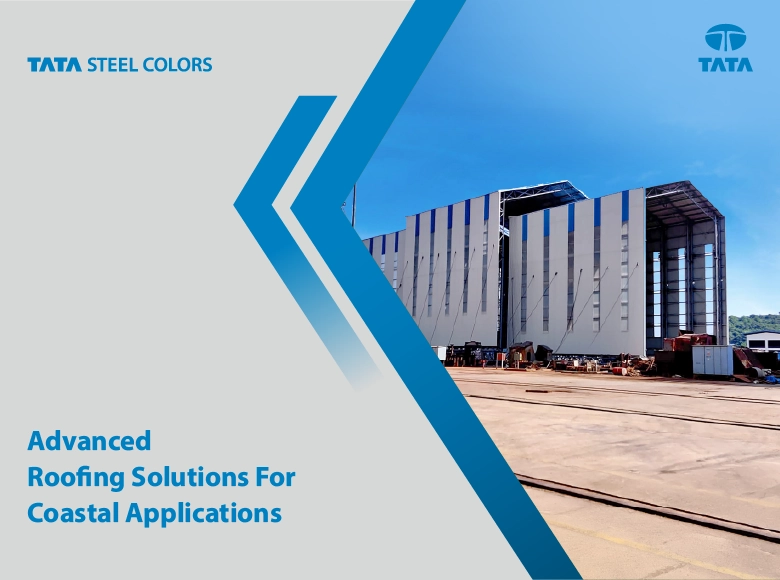
Why ports and marine infrastructure require specialized roof and wall cladding solutions
Ports and marine infrastructure operate in some of the most aggressive environments in the construction ecosystem. Unlike inland industrial facilities, these locations are continuously exposed to high humidity, salt-laden air, strong winds, and fluctuating weather conditions. These factors significantly influence material performance, especially when it comes to roof and wall cladding solutions.
For decision-makers planning warehouses, cargo handling units, maintenance facilities, and administrative buildings within port zones, selecting the right roof and wall cladding solutions becomes a critical engineering decision rather than a routine specification.
Understanding the environmental exposure in marine zones
Marine environments present a unique combination of stress factors that directly impact building materials. Constant exposure to saline air accelerates corrosion processes, while high moisture levels increase the risk of surface degradation. In addition, strong coastal infrastructure needs to withstand continuous wind stress , making structural stability a key requirement.
In such conditions, conventional roofing solutions in India that perform adequately in inland areas may hardly deliver the same level of durability or reliability. This makes it essential to adopt a specialized approach tailored to marine exposure.
Why standard industrial roofing approaches fall short
Typical industrial roofing systems are designed for moderate environmental conditions. While they may perform well in regions such as Industrial roofing in Pune or Factory shed roofing in Pune, where exposure levels are comparatively controlled, these systems are hardly optimized for the extreme demands of coastal infrastructure.
The primary limitations include:
- Faster corrosion of exposed metal surfaces
- Reduced lifespan of coatings due to salt deposition
- Higher risk of leakage due to wind-driven rain
- Increased maintenance frequency
These challenges highlight the need for premium roofing solutions in India that are engineered specifically for high-exposure environments.
The role of advanced roof & wall cladding systems in marine infrastructure
Roof and wall cladding solutions plays a crucial role in protecting the structural integrity of port buildings. In marine zones, roof and wall cladding systems must deliver high resistance to corrosion, maintain structural performance under wind loads, and ensure long-term weather-tightness.
High-performance cladding profiles are designed to:
- Support longer spans with minimal deflection
- Improve water drainage during heavy rainfall
- Reduce the number of joints and overlaps
- Maintain fastening integrity under dynamic wind conditions
These features contribute to a more reliable roofing system, especially in large port warehouses and logistics facilities.
Importance of integrated roof and wall cladding solutions
In coastal infrastructure, performance needs to be evaluated holistically. Roof and wall cladding solutions must function as a cohesive system to ensure overall building durability.
Integrated systems help in:
- Minimizing junction failures between roof and wall interfaces
- Improving resistance to wind-driven water ingress
- Enhancing structural stability under combined loads
- Ensuring uniform material performance across the building envelope
This system-based approach is particularly important for large port facilities, where even minor detailing failures can lead to significant operational disruptions.
Enhancing durability of manufacturing and storage facilities
Ports often include manufacturing units, repair workshops, and storage facilities that require durable building systems. Durable manufacturing facility walls and roofing must withstand continuous exposure without compromising performance.
Advanced materials used in roof and wall cladding solutions by Tata Steel Colors are designed to:
- Resist corrosion caused by salt and moisture
- Maintain surface integrity over extended exposure periods
- Reduce the risk of localized failures
- Support consistent performance across large structures
This ensures that facilities remain operational with minimal maintenance intervention.
Wind performance and structural reliability
Coastal regions experience higher wind speeds compared to inland areas. Roofing systems in such zones must be designed to handle wind uplift forces and dynamic loading conditions.
Engineered roofing solutions by Tata Steel Colors incorporate:
- Secure fastening systems that enhance uplift resistance
- Profile designs that improve load distribution
- Structural compatibility with supporting frameworks
- Tested performance under simulated wind conditions
These factors are critical in ensuring the safety and reliability of buildings in port environments.
Maintenance considerations in marine environments
Maintenance planning is a key factor in coastal infrastructure projects. Frequent repairs can disrupt operations, especially in high-activity port zones.
Using advanced roof and wall cladding solutions by Tata Steel Colors helps in:
- Reducing the frequency of maintenance interventions
- Improving access for inspection and upkeep
- Minimizing downtime due to roofing issues
- Ensuring predictable performance over time
For facility managers, this translates into better operational continuity and lower lifecycle disruption.
Long-term performance as a strategic priority
In port and marine infrastructure, roofing and wall cladding systems are expected to deliver consistent performance over long durations. The cost of failure in such environments extends beyond repair expenses and includes operational delays and safety risks.
By selecting premium roofing solutions by Tata Steel Colors that are engineered for marine conditions, project stakeholders can ensure:
- Improved durability under extreme exposure
- Reduced risk of structural and surface degradation
- Enhanced reliability of critical infrastructure
- Greater confidence in long-term performance
In Summary
Ports and marine infrastructure demand a fundamentally different approach to roof and wall cladding solutions that are met by Tata Steel Colors. The combination of salt exposure, humidity, and high wind conditions creates a challenging environment that standard industrial roofing systems might struggle to handle.
A system-based approach that integrates advanced roof and wall cladding solutions, and engineered fastening systems by Tata Steel Colors is essential for achieving reliable performance. By prioritizing roofing solutions that are specifically designed for coastal exposure, stakeholders can build infrastructure that meets the demands of modern port operations while ensuring long-term durability and efficiency.
For more details, please get in touch with our team.