
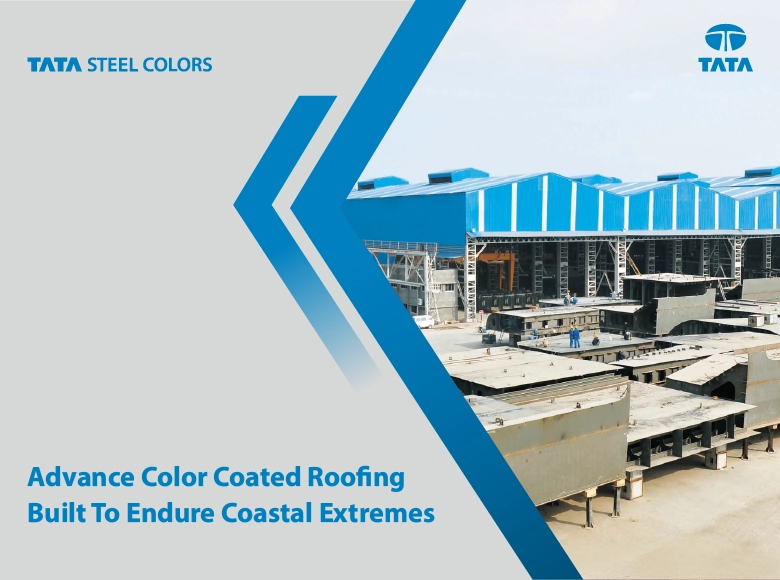
Ports represent some of the most demanding infrastructure environments in the built ecosystem. Cargo terminals, container yards, shipbuilding facilities, warehouses, and utility buildings located within port zones are exposed to continuous salt spray, high humidity, strong winds, ultraviolet radiation, and industrial pollutants. In such conditions, material degradation is accelerated, and corrosion becomes a persistent operational risk rather than a long-term concern.
For port infrastructure, the choice of construction material is therefore critical. Ultra-grade advanced color-coated steel coils have emerged as a reliable solution for protecting port buildings and structures from extreme exposure. By combining metallic coating technology with high-performance paint systems, these premium industrial coils function as a robust protective shield, extending service life and reducing maintenance challenges in aggressive marine environments.
Understanding the severity of port exposure conditions
Ports operate at the intersection of marine and industrial environments. Salt-laden air carries chloride ions that aggressively attack metal surfaces, while constant moisture accelerates electrochemical corrosion processes. In addition, port zones often experience high levels of particulate matter from cargo handling, vehicular movement, and industrial activity.
Roofing and wall systems in port facilities are subjected to repeated wetting and drying cycles, which intensify corrosion at cut edges, fasteners, and joints. Wind-driven rain and cyclonic conditions further test the integrity of building surfaces. Under these circumstances, conventional coated steel products struggle to deliver predictable long-term performance.
This is why corrosion-resistant steel for ports must be engineered specifically for high-salt, high-moisture, and high-wind environments.
What defines ultra-grade advanced color-coated steel coils
Ultra-grade advanced color-coated steel coils are manufactured using carefully controlled, multi-stage processes that combine a corrosion-resistant metallic coating with a durable, high-performance paint system.
The metallic coating acts as the primary barrier and sacrificial layer, protecting the steel substrate from chloride-induced corrosion. On top of this, the color-coated system adds a secondary protective layer that reduces moisture penetration, resists ultraviolet degradation, and limits surface contamination.
This dual-layer defense mechanism is what differentiates ultra-grade coated steel from basic coated steel used in less aggressive environments. For port infrastructure, where exposure levels are extreme and continuous, this layered protection is essential.
Corrosion resistance as the foundation of port durability
Corrosion is the single largest contributor to premature failure in port infrastructure. Roofs and façades that corrode early require frequent repair, repainting, or replacement, leading to operational disruption and high lifecycle costs.
Ultra-grade advanced color-coated steel coils significantly slow down corrosion initiation and propagation. The metallic coating protects vulnerable zones such as cut edges and scratches through sacrificial action, while the paint system limits direct exposure to moisture and salt deposits.
This makes such materials especially suitable as corrosion-resistant steel for ports, where long-term durability and asset protection are critical operational priorities.
Performance of coated steel in high-wind and coastal conditions
Ports are often located in cyclone-prone or high-wind regions. Roofing and wall systems must therefore maintain structural integrity under uplift pressures and dynamic loading.
Premium industrial coils used in ultra-grade coated steel systems are engineered to retain coating adhesion and flexibility under thermal and mechanical stress. This reduces the risk of coating cracking, peeling, or delamination, which can otherwise expose the steel substrate to rapid corrosion.
Consistent coating performance under stress ensures that roofs and walls continue to function as effective protective barriers even during extreme weather events.
Long-term maintenance efficiency in port infrastructure
Maintenance access in port environments is complex and costly. Roof inspections often require specialized safety arrangements, coordination with operations, and downtime in active cargo zones.
By using ultra-grade advanced color-coated steel coils, port authorities and operators can significantly reduce maintenance frequency. The enhanced resistance to corrosion, UV exposure, and surface degradation minimizes the need for frequent repainting or localized repairs.
Over the lifecycle of port facilities, this translates into lower maintenance expenditure, improved asset predictability, and reduced operational disruption.
Aesthetic stability and functional cleanliness
Although performance is the primary concern in port infrastructure, visual condition still matters. Port buildings such as administrative blocks, logistics terminals, and warehousing facilities are often highly visible and form part of the port’s public and commercial interface.
Advanced color-coated steel coils retain color stability and resist chalking or uneven fading, even under prolonged exposure to sun and salt. This ensures that coated steel surfaces maintain a uniform appearance while also limiting surface roughness where salt and dirt can accumulate.
Clean, stable surfaces are easier to wash down and inspect, supporting both functional cleanliness and long-term appearance.
Supporting diverse port applications
Ports encompass a wide range of building types, from large-span cargo sheds and container freight stations to workshops, utility buildings, and storage facilities. Ultra-grade coated steel coils offer versatility across these applications.
Their consistent formability and surface integrity support long sheet lengths, complex profiles, and modular construction approaches commonly used in port infrastructure. This adaptability makes them suitable for both new construction and the refurbishment of existing facilities exposed to extreme marine conditions.
Lifecycle value of premium industrial coils
While ultra-grade advanced color-coated steel coils may involve higher upfront material consideration compared to basic coated steel, their value is best assessed over the full lifecycle of port assets.
Extended service life, reduced maintenance interventions, and lower risk of corrosion-related failures contribute to favorable lifecycle economics. For ports operating continuously over decades, these benefits outweigh initial cost differentials.
This lifecycle perspective is why premium industrial coils are increasingly specified in critical coastal and marine infrastructure projects.
Material choice as a strategic decision for ports
Ports are long-term national and commercial assets. Any compromise in material performance can have cascading effects on safety, operations, and asset value. Selecting corrosion-resistant steel for ports is therefore a technical as well as a strategic decision.
Ultra-grade advanced color-coated steel coils provide a reliable balance of corrosion resistance, mechanical performance, and surface durability required to withstand extreme exposure. They act as a protective shield that preserves structural integrity and operational continuity in some of the harshest environments encountered in construction.
Conclusion: Building resilient ports with ultra-grade coated steel
Extreme exposure is an unavoidable reality for port infrastructure. Salt-laden air, moisture, wind, and industrial activity combine to create conditions that rapidly degrade conventional materials.
Ultra-grade advanced color-coated steel coils offer a proven solution by delivering layered protection through metallic coatings and high-performance paint systems. As corrosion-resistant steel for ports, they extend service life, reduce maintenance burden, and protect critical assets from premature failure.
In an environment where durability defines reliability, these premium industrial coils serve as the ultimate shield, enabling ports to operate safely, efficiently, and sustainably over the long term.
For more details, please get in touch with our team.