
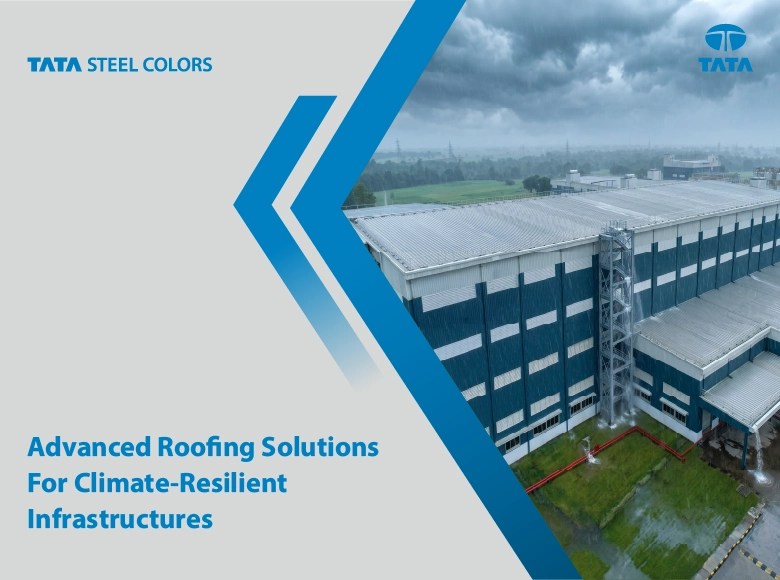
Climate resilience has become a defining requirement for modern infrastructure. Across regions that experience intense and prolonged rainfall, buildings are exposed to persistent moisture, wind-driven rain, high humidity, and frequent wet-dry cycles. These conditions place sustained stress on roofs and walls, making material selection and system design critical to long-term performance.
Roof and wall cladding systems form the primary protective layer between the built environment and external climate forces. In high-rainfall zones, adopting the right cladding strategies is essential for preventing water ingress, controlling moisture movement, reducing maintenance burden, and ensuring operational continuity. Climate-resilient infrastructure is therefore built through structural strength and through carefully engineered roofing and wall cladding solutions.
Challenges faced by buildings in high-rainfall regions
High-rainfall zones present a unique combination of environmental challenges. Buildings are exposed to heavy downpours, wind-driven rain, prolonged surface wetting, and elevated ambient humidity. Over time, these conditions can overwhelm conventional construction approaches that are designed primarily for basic weather protection.
Common issues include:
- Water leakage through roof laps, fasteners, and penetrations
- Moisture ingress through wall joints and interfaces
- Accelerated corrosion due to constant wetting
- Reduced service life of roofing and cladding materials
- Increased maintenance frequency and operational disruption
Role of cladding systems in climate resilience
Cladding systems act as the first line of defense against external weather conditions. In high-rainfall areas, their role extends beyond surface coverage to include water management, pressure equalization, and controlled moisture movement.
Well-designed cladding systems:
- Shed water efficiently from the roof and wall surfaces
- Prevent capillary action at joints and overlaps
- Limit moisture retention within the building envelope
- Maintain performance under repeated wet-dry cycles
Roofing strategies for high rainfall areas
Roofing for high rainfall areas requires careful attention to geometry, material behaviour, and detailing. Large roof surfaces must manage high volumes of runoff while resisting wind-driven rain and uplift forces.
Key roofing strategies include:
- Adequate roof slope to ensure rapid drainage
- Long-length roofing sheets to minimize transverse joints
- Engineered overlaps that prevent backflow under wind pressure
- Fixing systems designed to accommodate thermal movement
Monsoon-resistant roofing systems are typically designed to reduce reliance on sealants and exposed penetrations, which are common failure points over time. By allowing roofing sheets to move independently under thermal expansion, these systems maintain joint integrity even under extreme climatic stress.
Importance of rain-proof cladding systems for walls
While roofs receive most of the rainfall load, walls are often subjected to wind-driven rain, which can force water into joints, laps, and service penetrations. Rain-proof cladding systems are therefore critical for maintaining weather-tightness in high-rainfall zones.
Effective wall cladding solutions incorporate:
- Secure panel engagement to resist water tracking
- Properly designed vertical and horizontal joints
- Robust detailing around doors, windows, and services
- Durable surface finishes that resist moisture absorption
Integrated roof and wall cladding approach
Climate-resilient infrastructure is best achieved when roofs and walls are designed as a coordinated system. Weak interfaces between roof and wall cladding are among the most common sources of leakage in high-rainfall environments.
An integrated approach ensures:
- Continuity of weather-tight layers
- Consistent drainage paths from roof to wall to ground
- Reduced dependency on secondary sealing measures
Managing moisture and condensation in wet climates
High rainfall regions are often associated with high humidity, which increases the risk of internal condensation. When warm, moisture-laden air comes into contact with cooler roof or wall surfaces, condensation can form within the cladding assembly.
Modern cladding systems address this through:
- Insulated roof and wall assemblies
- Vapour control layers that limit moisture migration
- Controlled air gaps that allow pressure equalization
Durability and corrosion resistance considerations
Prolonged exposure to moisture accelerates corrosion and surface degradation without adequate protection of materials. In high-rainfall zones, corrosion resistance becomes a defining factor in material selection for roofs and walls.
Advanced roofing and wall cladding solutions are designed with protective coatings and substrates that slow corrosion initiation and propagation. This is particularly important at vulnerable areas such as cut edges, fasteners, and overlaps.
Improved durability directly supports climate resilience by extending service life and reducing the need for frequent repair or replacement.
Maintenance efficiency and lifecycle performance
Maintenance access in high-rainfall regions is often challenging due to weather interruptions and safety considerations. Roof and wall cladding systems that require frequent inspection or sealing increase operational risk and cost.
Climate-resilient cladding strategies prioritize:
- Long-term weather-tight performance
- Reduced dependence on periodic resealing
- Stable surface behaviour under continuous exposure
Applications across infrastructure sectors
High-rainfall zones are common across coastal regions, hilly terrains, and monsoon-dominated geographies. Climate-resilient roof and wall cladding strategies are therefore relevant across a wide range of infrastructure applications, including:
- Industrial plants and warehouses
- Commercial campuses and institutional buildings
- Transport terminals and public infrastructure
- Utilities and process facilities
Designing for future climate variability
Climate patterns are becoming increasingly unpredictable, with more frequent extreme rainfall events. Infrastructure designed today must be capable of withstanding future climatic stress rather than historical averages.
Roofing for high rainfall areas and rain-proof cladding systems that perform reliably under extreme conditions help future-proof buildings against escalating weather challenges. This forward-looking approach supports resilient infrastructure development that remains functional and safe over decades.
Conclusion: Strengthening infrastructure through resilient cladding strategies
Building climate-resilient infrastructure in high-rainfall zones requires a fundamental shift from basic weather protection to performance-driven design. Roof and wall cladding systems play a central role in this transition by managing water, resisting moisture ingress, and maintaining durability under prolonged exposure.
Monsoon-resistant roofing, rain-proof cladding systems, and integrated wall cladding solutions together form a robust defense against heavy rainfall and humidity. By adopting these strategies, infrastructure developers and asset owners can reduce leakage risk, control maintenance costs, and ensure long-term operational reliability.
In regions where rainfall defines environmental conditions, investing in resilient roof and wall cladding solutions is more than just a design choice; it is a critical requirement for sustainable and dependable infrastructure. For more details, please get in touch with our team.